
There’s a specific kind of “travel itch” that hits when you have an autoimmune condition. It’s that deep, soul-level desire to see the world, mixed with a nagging, heavy fear that your body simply won’t let you.
For many of us, the warriors battling Hashimoto’s, hypothyroidism, or celiac disease, the idea of a vacation can feel more like a military operation than a getaway. We worry about the “crash.” We worry about the flare-up that waits behind a 12-hour flight or a missed meal.
But I’m here to tell you, from one traveler to another: you can still see the world. You just have to learn to travel differently.
Our First Great (And Slightly Disastrous) Escape
Tammy and I learned this the hard way. Early in her journey with Hashimoto’s, we decided to take a “dream trip” to the coast. We approached it like we used to, back when “energy management” wasn’t a phrase in our vocabulary. We had a list of twelve sights to see in three days. We were up at 6:00 AM, walking miles of shoreline, and eating at whatever restaurant looked busy.
By the second night, the “invisible wall” hit.
Tammy wasn’t just tired; she was done. Her joints throbbed, her brain fog was so thick she couldn’t choose a dinner entree, and she spent the final day of our “dream trip” in a darkened hotel room while I went out to find gluten-free crackers. We felt defeated. We felt like the disease had won that round.
What we got wrong was simple: we tried to travel like people who weren’t in a battle. We didn’t account for the “energy tax” that autoimmune issues levy on every single activity.
If you’re feeling overwhelmed by the logistics of your next trip, you need a roadmap that accounts for your strength.
The Pacing Paradox: Less Is Actually More
The biggest shift we made was embracing the pacing paradox. When you have limited spoons, you feel a desperate urge to “make the most” of every second. But in the autoimmune world, the faster you go, the less you actually see because your brain starts to shut down to protect your body.
Now, we follow the “One Big Thing” rule.
We choose one major activity per day. Maybe it’s a specific museum or a certain hike. Everything else is a “bonus.” If we have the energy after lunch, we might wander a bit. If not? We head back for a nap. By slowing down, Tammy actually remembers the sights we see, rather than just remembering how much her feet hurt.

Strategic Sensory Downtime
Energy management isn’t just about sitting down; it’s about sensory management. Traveling is loud, bright, and smelly. For a nervous system already on edge from an autoimmune flare, this is exhausting.
We’ve learned to schedule what we call “The Dark Hour.” Every afternoon, regardless of how “good” Tammy feels, we go back to the room. We close the curtains, turn off the phones, and just be. This allows her adrenal system to reset. It’s the difference between a pleasant dinner out and a total evening meltdown.
You can find more tips on managing these specific autoimmune health challenges here. ↑
Knowledge Is Power: The Energy Management Checklist
Before you zip that suitcase, walk through this checklist. These are the practical “armor” pieces we never leave home without:
- [ ] The Buffer Day: Never schedule anything for the day you arrive or the day you get back. These are “rest-only” zones.
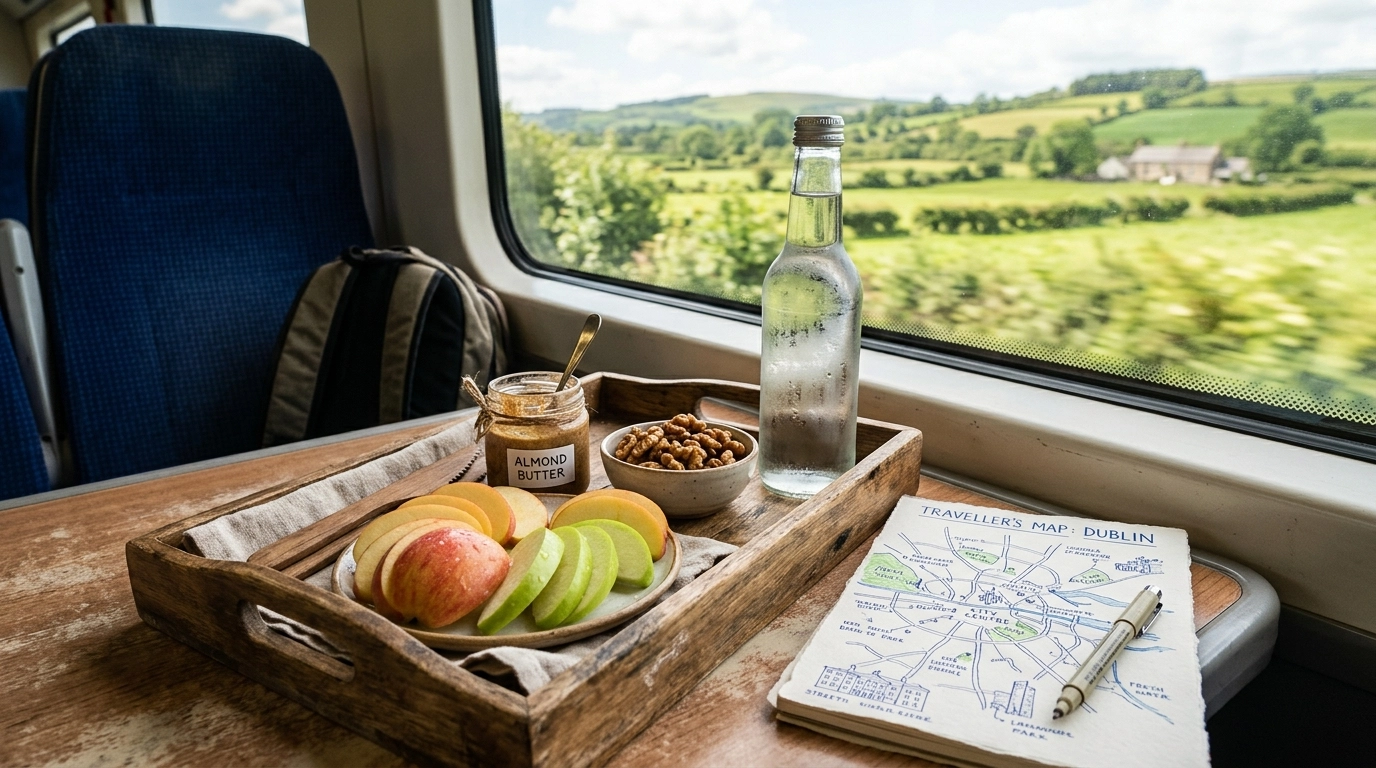
- [ ] The Snack Fortress: Never rely on airport or roadside food. Pack a dedicated bag of “safe” high-protein, gluten-free snacks (beef jerky, nuts, seed bars).
- [ ] Temperature Control: Autoimmune bodies often struggle with thermoregulation. Pack layers, even if you’re going somewhere warm.
- [ ] The “Flare Kit”: This is a small pouch with your emergency meds, electrolytes, a sleeping mask, and peppermint oil for headaches.
- [ ] Pre-Pinned “Safe” Eats: Use Google Maps to pin 3-4 gluten-free friendly restaurants near your hotel before you leave. Decision fatigue is real!
Love Is in the Details: Communication Scripts
One of the hardest parts of traveling is telling your companions, or even strangers, that you need to stop. We often feel like a “burden.” Having scripts ready takes the emotional weight out of the conversation.
To a Travel Companion:
“I’m having a high-symptom morning. I need to stay in and rest until lunch so I can enjoy the evening with you. Why don’t you go see the [Sight] and we can meet up for a safe gluten-free meal later?”
To a Hotel Concierge:
“I have a severe medical dietary restriction (Celiac/Autoimmune). Could you help me identify which local restaurants are most experienced with cross-contamination? It’s vital for my health during this trip.”
To Yourself (The Most Important One):
“Resting right now isn’t ‘missing out.’ It is the ‘maintenance’ that allows me to keep exploring tomorrow. I am doing a great job taking care of my body.”
Adventure Is Still Waiting for You
Traveling with Hashimoto’s or Celiac doesn’t mean your world has to get smaller. It just means your world needs to be navigated with more intention and a lot more self-compassion. Tammy and I have seen some of the most beautiful places on Earth, not because we “pushed through” the pain, but because we learned to honor the rhythm of her body.
Your journey is unique, and your pace is exactly where it needs to be. For more deep dives into the gluten-free lifestyle and how to thrive, head over to The Wandering Quill Blog Space ↑

If you’re navigating this too, you’re not alone, and you can still travel well.
Tried & Tested
We use these pacing strategies and checklists in our own travels across the country. Whether we’re flying to a conference or driving to the coast, we personally test every “safe” snack and travel hack so we can answer your questions honestly.
Medical Disclaimer: We share our lived gluten-free experience and what has worked for us on our journey. We are not doctors. Please consult with your healthcare provider and do your own research before making significant changes to your travel or health routine.
“Life is either a daring adventure or nothing at all.” : Helen Keller
Let’s Hear From You!
Where is the one place you’ve always wanted to go but felt “held back” by your health? Or, do you have a secret travel tip that keeps your energy up?
[Click here to send us a message or leave a review!] We’d love to hear your story.
: Martin & Tammy