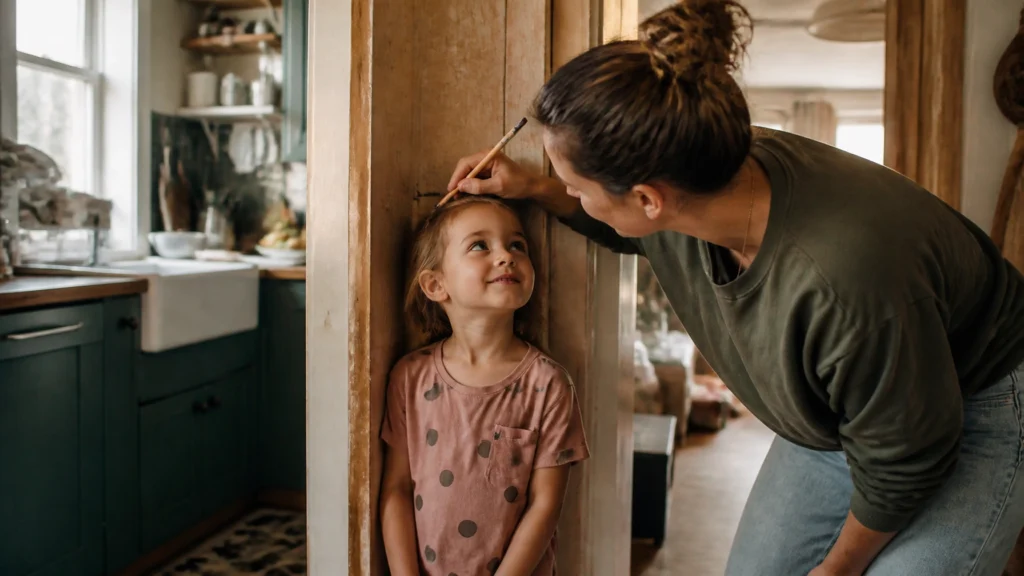
There is a sacred ritual in many of our homes: the pencil mark on the doorframe. We stand our children up straight, tell them to "breathe in deep," and slide a ruler over their heads to see how many fractions of an inch they’ve gained since the last season. But for those of us raising Little Quills, our children navigating the complex terrains of celiac disease and Hashimoto’s, that pencil mark can carry a heavy emotional weight.
When the marks don't move for months, or when we notice our child is a head shorter than their classmates, it’s more than just a measurement. It’s a source of worry that keeps us up at night. We wonder: Is their body getting what it needs? Are they falling behind? Will they ever catch up?
If you are feeling that "growth chart anxiety" today, I want you to take a deep breath. You are not alone. My wife, Tammy, and I have walked the long road of autoimmune management, and we know that while the journey is steep, our children are incredibly resilient. They aren't just "smaller"; they are warriors in training. Today, in Week 3 of our series, we’re diving into the physical side of this battle, how these conditions affect developing bodies and, more importantly, how we can nurture them back to their full potential.
The Thief in the Gut: Celiac Disease and Stunted Growth
When a child has undiagnosed or unmanaged celiac disease, there is a literal "thief" living in their digestive tract. Every time they ingest even a microscopic crumb of gluten, their immune system attacks the villi, the tiny, finger-like projections in the small intestine that absorb nutrients.
When those villi are flattened (villous atrophy), the body can’t pull in the "building blocks" it needs to grow. This leads to malabsorption, which is the primary driver behind stunted growth and delayed puberty. It’s heartbreaking to realize that while our kids are eating, their bodies are effectively starving for the specific minerals that build bone and muscle.
The good news? The body’s capacity for "catch-up growth" is nothing short of a miracle. Once the "thief" is evicted through a strict gluten-free diet, those villi begin to heal. Most children see a dramatic "rebound" in height and weight within 12 to 24 months. We aren't just cutting out wheat; we are reclaiming their future growth.
The Engine Room: Hashimoto’s and the Growth Velocity
While celiac is about absorption, Hashimoto’s is about the "engine" of the body. The thyroid gland is the master controller of metabolism and growth. When a child’s thyroid is under attack, that engine slows down.
For a Little Quill battling Hashimoto’s, this often manifests as a "sluggish" growth velocity. They might stay the same height for an entire year. You might also notice they are constantly exhausted, sensitive to the cold, or struggling with "brain fog" that makes even a simple game of tag feel like a marathon.
Nurturing a child through this means becoming a detective. We have to look past the "tiredness" and see the physiological struggle. It’s a battle of hormones, and getting that balance right with the help of a pediatric endocrinologist is the key to restarting their "growth engine."
↑ Take the First Step Toward Clarity: If you’re feeling overwhelmed by the labels, the labs, and the lifestyle changes, we’ve put everything we’ve learned into one place. The Wandering Quill Guide eBook is designed to be your compass, helping you navigate the gluten-free world with confidence and joy.
The Map of Growth: Tracking with Specialists
We cannot fight this battle in the dark. Data is our ally. This is why tracking growth curves is so vital for our children. A single measurement doesn't tell the whole story, but the trend does.
We must insist on regular "check-ins" with both pediatric gastroenterologists and endocrinologists. If your child’s height percentile is dropping, don't let anyone tell you they are just a "late bloomer" without doing the bloodwork. We are our children’s primary advocates. We watch the trends, we ask for the TSH and Free T4 levels, and we ensure their celiac antibody levels (tTG-IgA) are trending toward zero. When we have the map, we can plan the route to victory.

Building Blocks: Nutritional Strategies for Our Little Warriors
Feeding a gluten-free child is about more than just finding "safe" bread. It’s about nutrient density. Because their bodies have been through the ringer, we need to focus on the specific minerals that support bone density and physical development.
- Calcium & Vitamin D: These are the "steel beams" of the skeleton. Since many GF kids also struggle with dairy early on (due to secondary lactose intolerance from celiac damage), we look to fortified plant milks, sardines, and leafy greens.
- Iron: Anemia is the shadow that often follows celiac disease. We focus on red meat, beans, and spinach, always paired with Vitamin C (like a squeeze of lemon or a side of strawberries) to help that iron actually get absorbed.
- Zinc & Selenium: These are the "secret weapons" for thyroid health and immune function. A few Brazil nuts (for selenium) or a handful of pumpkin seeds (for zinc) can be powerful additions to their lunchbox.
We treat every meal as an opportunity to repair and rebuild. It’s not about restriction; it’s about nourishment as an act of love.
Movement is Medicine: Balancing Fatigue with Strength
It’s tempting to want to wrap our kids in bubble wrap when they are struggling with fatigue. But safe physical activity is essential for building the muscle and bone strength they’ll need as they grow.
The key is "pacing." On days when their energy is low, we might just do a gentle walk or some floor stretching. On "victory days" when they feel strong, we encourage them to run, jump, and climb. We are teaching them to listen to their bodies, a skill that will serve them for the rest of their lives. We aren't just building bodies; we are building resilience.
If you missed the beginning of this journey, I highly recommend circling back to our Little Quills Intro Post to see the full roadmap of this series. And as your child grows, their needs at school will change, too, be sure to check out our upcoming guide on 504 Plans and School Support to ensure their physical needs are met in the classroom.

The Heart of the Matter: Navigating the "Smallest in the Room" Emotions
Perhaps the hardest part of this journey isn't the vitamins or the blood draws, it’s the look on our child’s face when they realize they are the shortest in their class.
Children want to fit in. Being "smaller" can feel like a visible mark of their illness. As parents, we have to hold space for that grief while also reframing the narrative. We tell them: "Your body is doing a lot of hard work on the inside right now. It’s fighting a big battle, and we are so proud of how strong you are."
We celebrate the "non-height" victories, the day they have more energy to play, the day their tummy doesn't hurt, the day they master a new skill. Their worth is not measured in inches; it is measured in the incredible strength they show every single day they choose to thrive despite their challenges.
When to Worry and When to Trust the Process
Patience is the hardest virtue to practice when you’re waiting for your child to grow. It’s okay to worry when growth stalls for more than six months, or when new symptoms like joint pain or extreme hair loss appear. These are signs to call the specialist.
But most of the time, we have to trust the process. Healing isn't linear. There will be seasons of "plateau" and seasons of "growth spurts." Our job is to stay the course, keep the kitchen safe, and keep the encouragement flowing.
You are doing a brave thing, mama. You are doing a hard thing, dad. Together, we are raising a generation of Little Quills who know that their bodies are worth fighting for.
↑ Your Journey Deserves a Guide: Don't navigate this alone. The Wandering Quill Guide eBook is your ultimate resource for living, and thriving, gluten-free as a family. Let’s make this journey beautiful, one meal at a time.
Tried & Tested
In our own kitchen, Tammy and I personally test every recipe and lifestyle tip we share. We know the frustration of a "gluten-free" muffin that turns to sawdust, and we’ve lived through the exhaustion of autoimmune flares. We share our lived experience so we can answer your questions honestly and from the heart.
Medical Disclaimer: We are not doctors or licensed medical professionals. We share our personal journey and the knowledge we’ve gained through years of living with Hashimoto’s and Celiac disease. Please always do your own research and consult with your child’s pediatric specialists before making significant changes to their medical or nutritional plan.
"Growth is not just about getting taller; it is about the quiet, invisible strength of a body healing from the inside out." : Unknown
We’d Love to Hear From You!
How are your Little Quills doing? Are you navigating growth chart anxiety, or have you seen a "catch-up" victory lately? We want to hear your stories! Leave a comment below or send us a message. Your journey inspires this community.
Martin & Tammy