If you’ve recently been diagnosed with celiac disease, Hashimoto’s, hypothyroidism, or gluten sensitivity, the first question may not be “What is gluten?” It may be much more practical:
“What am I supposed to eat now?”
We understand that question because we lived it.
When Tammy was diagnosed with Hashimoto’s and hypothyroidism in 2019, the same year we were married, our kitchen changed almost overnight. Grocery shopping became label-reading practice. Familiar recipes suddenly needed new ingredients. Even simple meals could feel overwhelming.
But we learned something important: gluten-free living does not have to mean starting over every day. We began with simple foods, built balanced plates, and learned how to make meals we already loved in a safer way.
This seven-day plan is your starting point. It is not a complicated detox or an anti-inflammatory deep dive. It is a plain-spoken roadmap for getting breakfast, lunch, and dinner on the table.
One meal at a time. One small victory at a time.
Before You Begin: Keep Gluten Safety at the Center
For someone with celiac disease, avoiding gluten means avoiding wheat, barley, rye, and foods made with them. Even crumbs and shared cooking surfaces can create cross-contact. The Celiac Disease Foundation explains celiac disease and gluten-free treatment here.
Choose certified gluten-free products when possible, especially for oats, bread, pasta, tortillas, broth, sauces, and packaged snacks. If you are still being tested for celiac disease, speak with your healthcare provider before removing gluten completely, as testing may be affected.
If your household includes both gluten and gluten-free foods, our Guide to a Safe Gluten-Free Kitchen can help you think through toasters, cutting boards, storage, and everyday kitchen habits.
Beginner Pantry Staples to Stock

You do not need to buy every gluten-free product in the store. Start with a small collection of flexible ingredients that can work across several meals.
Simple gluten-free carbohydrates
- Rice, quinoa, and potatoes
- Certified gluten-free oats
- Corn tortillas
- Certified gluten-free bread or pasta
- Sweet potatoes
- Buckwheat flour or a gluten-free pancake mix
Easy proteins
- Eggs
- Chicken thighs or chicken breast
- Salmon, cod, tuna, or shrimp
- Ground turkey
- Canned chickpeas, black beans, and lentils
- Plain Greek yogurt, if tolerated
Flavor builders
- Extra-virgin olive oil
- Garlic, onions, lemons, and fresh herbs
- Tomato sauce and tomato paste
- Gluten-free tamari
- Hummus
- Peanut butter, almond butter, or tahini
- Dried herbs and spices
Fresh foods
- Spinach or mixed greens
- Broccoli, carrots, zucchini, peppers, and green beans
- Bananas, apples, berries, oranges, and pears
- Avocados
Buy ingredients that can appear more than once. That is how we keep gluten-free cooking practical and affordable.
Your 7-Day Gluten-Free Meal Plan
Portions can be adjusted to your appetite, energy needs, and household. Every packaged ingredient should be checked for a gluten-free label or carefully reviewed for wheat, barley, rye, malt, and cross-contact warnings.
Day 1: Start With Familiar Foods
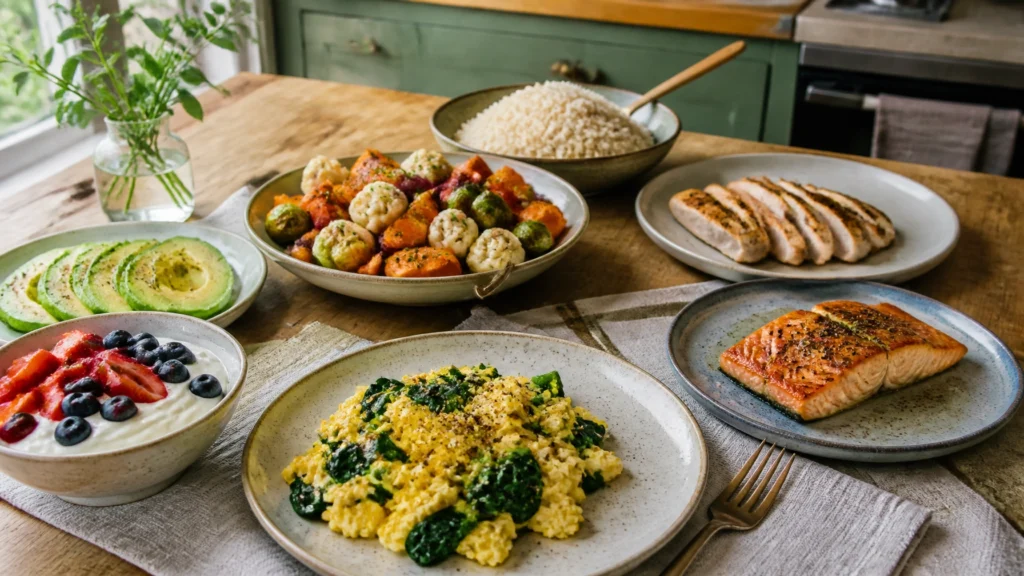
Breakfast: Scrambled eggs with spinach and mushrooms, plus sliced avocado.
Lunch: Chicken salad bowl with mixed greens, cucumber, tomato, pumpkin seeds, olive oil, and lemon.
Dinner: Baked salmon with quinoa and roasted broccoli.
Optional snack: An apple with almond butter or a handful of walnuts.
This first day is intentionally simple. There is no need to create a restaurant-style meal while you are still learning your new routine.
Day 2: Build a Colorful Bowl
Breakfast: Certified gluten-free oats with blueberries, chia seeds, cinnamon, and milk of choice.
Lunch: Quinoa and chickpea bowl with roasted zucchini, carrots, peppers, and a drizzle of tahini.
Dinner: Turkey meatballs served over zucchini noodles with gluten-free tomato sauce.
Optional snack: Carrot sticks with hummus.
Cook extra quinoa and roasted vegetables today. Leftovers will make tomorrow’s meals easier.
Day 3: Let Leftovers Do Some Work
Breakfast: Smoothie with banana, spinach, almond butter, and unsweetened milk. Add a gluten-free protein powder if you use one.
Lunch: Leftover quinoa and roasted vegetable bowl with chickpeas and lemon dressing.
Dinner: Roasted chicken thighs with sweet potatoes and green beans.
Optional snack: A hard-boiled egg with an orange or kiwi.
A meal plan should reduce stress, not create more of it. Repeating ingredients is not boring; it is a useful system.
Day 4: Gluten-Free Comfort Food
Breakfast: Avocado toast on certified gluten-free bread, topped with a fried or poached egg.
Lunch: Tuna salad served over mixed greens. Combine tuna with celery, herbs, lemon, and mayonnaise or mashed avocado.
Dinner: Beef and vegetable stir-fry with broccoli, carrots, and snap peas over rice. Use gluten-free tamari instead of regular soy sauce.
Optional snack: A pear with sunflower seeds or almonds.
This is one of those days when having cooked rice in the refrigerator can save the evening. Add a fried egg, leftover meat, or sautéed vegetables, and you have a meal.
Day 5: Make Dinner Stretch
Breakfast: Plain Greek yogurt with berries, cinnamon, and certified gluten-free granola.
Lunch: Leftover chicken with brown rice and steamed vegetables.
Dinner: Baked cod with roasted carrots and a simple quinoa pilaf made with herbs and olive oil.
Optional snack: Apple slices with peanut butter.
If dairy does not work for you, swap the yogurt for a smoothie, chia pudding, or eggs. Gluten-free does not mean one-size-fits-all.
Day 6: Taco Night Without the Stress
Breakfast: Sweet potato hash with onions and peppers, topped with eggs.
Lunch: Lettuce-wrap tacos with ground turkey or black beans, avocado, shredded cabbage, and salsa. Serve with rice if you need a heartier meal.
Dinner: Shrimp tacos in certified gluten-free corn tortillas with cabbage slaw, lime, and salsa.
Optional snack: Fresh grapes or melon with pumpkin seeds.
Tacos are one of our favorite beginner meals because everyone can assemble their own plate. They also work well in a mixed-diet household: one person can use corn tortillas while another uses regular tortillas, provided you prevent cross-contact.
Day 7: Finish With Something Cozy
Breakfast: Buckwheat pancakes topped with berries, cinnamon, and a small drizzle of maple syrup. Make sure the buckwheat flour is labeled gluten-free.
Lunch: Salmon rice bowl with cucumber, carrots, avocado, and gluten-free tamari. Use cooked salmon, canned salmon, or leftovers.
Dinner: Chickpea and vegetable curry with coconut milk, served over rice. Check the curry paste, spices, and broth for gluten-free labeling.
Optional snack: An orange with a small serving of nuts or seeds.

The Meal-Planning Shortcut We Learned
You do not have to cook three completely new meals every day. That expectation made our early gluten-free journey harder than it needed to be.
Instead, try this simple rhythm:
- Cook a pot of rice or quinoa.
- Roast two trays of vegetables.
- Prepare one protein for leftovers.
- Wash greens and cut a few snack vegetables.
- Keep fruit, nuts, and eggs available for quick meals.
That small amount of preparation gives you building blocks instead of rigid recipes. A bowl can become lunch. Leftover chicken can become tacos. Roasted vegetables can become breakfast beside eggs.
This is not restriction. It is a new kitchen language, and we can learn it together.
If You Want the Anti-Inflammatory Next Step
This beginner plan is about answering the immediate question: What do I eat this week?
If you are ready to explore a more detailed approach focused on anti-inflammatory ingredients, planning, and wellness habits, continue with our 7-Day Anti-Inflammatory Kickstart. Think of this meal plan as your foundation and that guide as the next layer, not a replacement for medical care, and not another set of rules to fear.

A Few Final Gluten-Free Safety Reminders
- Read labels on sauces, broth, spice blends, deli meats, and packaged foods.
- Use a separate toaster or toaster bags for gluten-free bread.
- Be cautious with shared butter, jam, peanut butter, cutting boards, and colanders.
- Avoid regular soy sauce unless it is specifically labeled gluten-free.
- Ask your healthcare provider or a registered dietitian about nutrient needs, especially iron, fiber, vitamin D, iodine, and selenium.
- If you have celiac disease, take cross-contact seriously even when a food appears naturally gluten-free.
You are allowed to feel overwhelmed. A diagnosis can feel heartbreaking and confusing. But you are also allowed to learn slowly, ask questions, make adjustments, and celebrate every meal that makes life feel a little more manageable.
The first week does not have to be perfect. It only has to be a beginning.
Tried & Tested
We use these kinds of recipes in our own kitchen, and we personally test everything we share so we can answer questions honestly and tell you what worked for us.
We share our lived gluten-free experience and what we know from our journey, but we are not doctors. Please do your own research and speak with your healthcare provider or a qualified dietitian about your individual needs, diagnosis, medications, and nutritional requirements.
“Small steps every day add up to big changes.”
We’d Love to Hear From You
Did this meal plan help you get through your first gluten-free week? Have you adapted one of these meals for your family?
Send us a message through The Wandering Quill contact page, leave a review, or email us at lairdmartin@gmail.com. We love hearing what our fellow warriors are cooking, discovering, and learning along the way.
If you are ready for more structure, our Autoimmune Meal Planner is a gentle next step for organizing meals around your own routine.
It gets easier. The labels become more familiar. The safe meals become second nature. And before long, you may find yourself helping another newly diagnosed warrior build their first gluten-free plate.
You are not alone in this journey. We are walking it with you.